 en
 Italian


- 04/11/2026
- Technological materials
Index
-
Article description
- Zero crystalline silica surfaces: the new Silestone® QXeron family
- Soft Sand: Silestone® sand-colored surface for minimalist interiors
- Clay Veil: clay-beige tones and natural veining
- Silestone® kitchen countertops and islands: applications of the Mineral Harmony collection
- Hybriq+® technology: recycled materials and surface performance
- Mineral surfaces and interior design trends: minimalism, Japandi and natural colors
- Fill the contact form
Surfaces in natural tones, delicate veining and a formulation with zero crystalline silica. With Mineral Harmony, Cosentino expands the Silestone® range by introducing a new collection of mineral surfaces designed for interior architecture and contemporary furnishings.
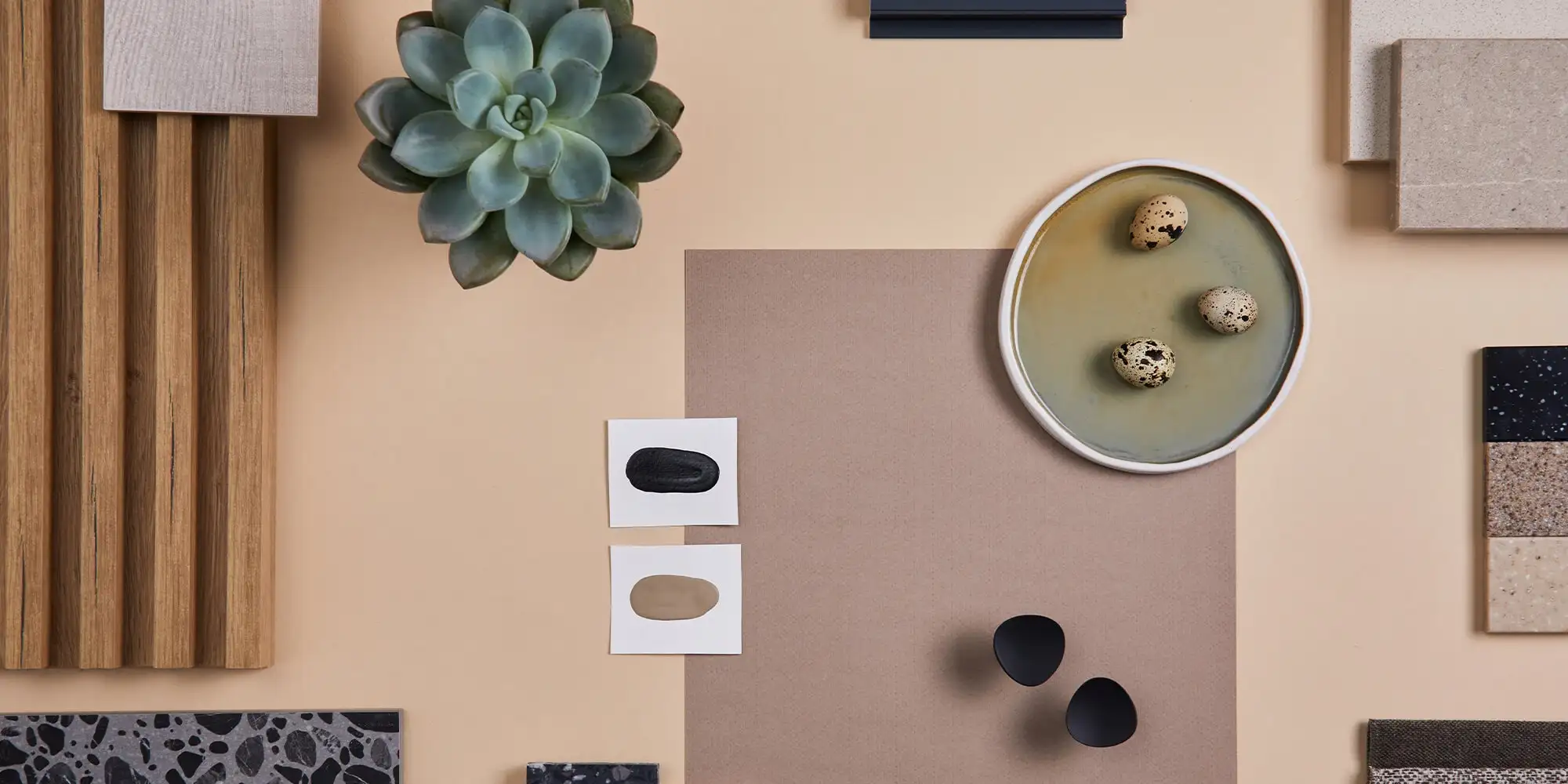
Presented in October 2026, Mineral Harmony interprets the aesthetic of mineral landscapes through a neutral and luminous palette, characterized by uniform backgrounds, earthy hues and subtle graphic details.
The collection includes two shades, Soft Sand and Clay Veil, conceived to fit into minimalist environments and projects inspired by contemporary Mediterranean and Japandi styles.
The new surfaces are intended for different applications, including kitchen countertops, islands, wall cladding and integrated furnishings, combining aesthetic research with the material's technical characteristics. Mineral Harmony also represents the first launch of the new Silestone® QXeron family, developed with Hybriq+® technology.
Zero crystalline silica surfaces: the new Silestone® QXeron family
One of the main features of Silestone® Mineral Harmony concerns the composition of the material. The collection inaugurates Silestone® QXeron, a new generation of hybrid mineral surfaces with zero crystalline silica, as defined by Cosentino.
The project fits into the evolution of material formulations intended for furnishings and interior architecture, a sector in which surface composition plays an increasingly important role in product selection.
Through the proprietary Hybriq+® technology, the new colors incorporate a high percentage of recycled materials and selected minerals. Research into the components is accompanied by the development of surfaces that maintain the functional characteristics associated with the Silestone® brand, with particular attention to resistance and durability.
Mineral Harmony thus introduces a new proposal in the field of mineral surfaces for kitchen and interior design, combining formulation development and color research.
Soft Sand: Silestone® sand-colored surface for minimalist interiors
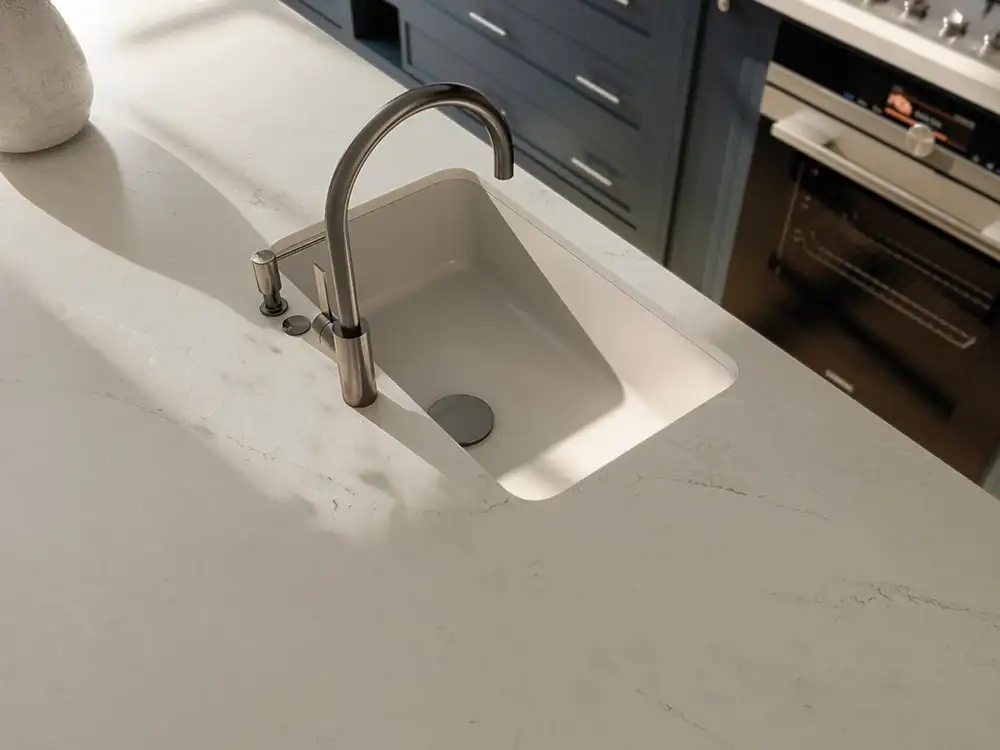
Soft Sand is one of the two shades in the Mineral Harmony collection. The surface features a light sand tone, characterized by a uniform background crossed by subtle organic streaks.
The texture introduces light visual variations that give depth to the material without creating strong contrasts. The result is a balanced-looking surface, designed to interact with different materials and finishes.
The color is suited to projects that favor neutral palettes, bright spaces and surfaces with an essential aesthetic. In contemporary design contexts, Soft Sand reflects the search for natural tones for kitchen countertops, islands and cladding, maintaining a discreet visual presence.
Clay Veil: clay-beige tones and natural veining
The collection's second proposal is Clay Veil, a surface inspired by the mineral tones of clay. The color stands out for a warm beige background, enriched by soft, graduated veining that blends gradually with the surface.
The color variations recall the appearance of natural stones and earths, creating a sober and uniform material effect. Clay Veil is conceived for spaces where color helps define a welcoming atmosphere, without giving up a contemporary language.
The shade fits into the research on stone-effect surfaces and beige finishes for interior design, particularly coherent with projects characterized by natural materials and warm palettes.
Silestone® kitchen countertops and islands: applications of the Mineral Harmony collection
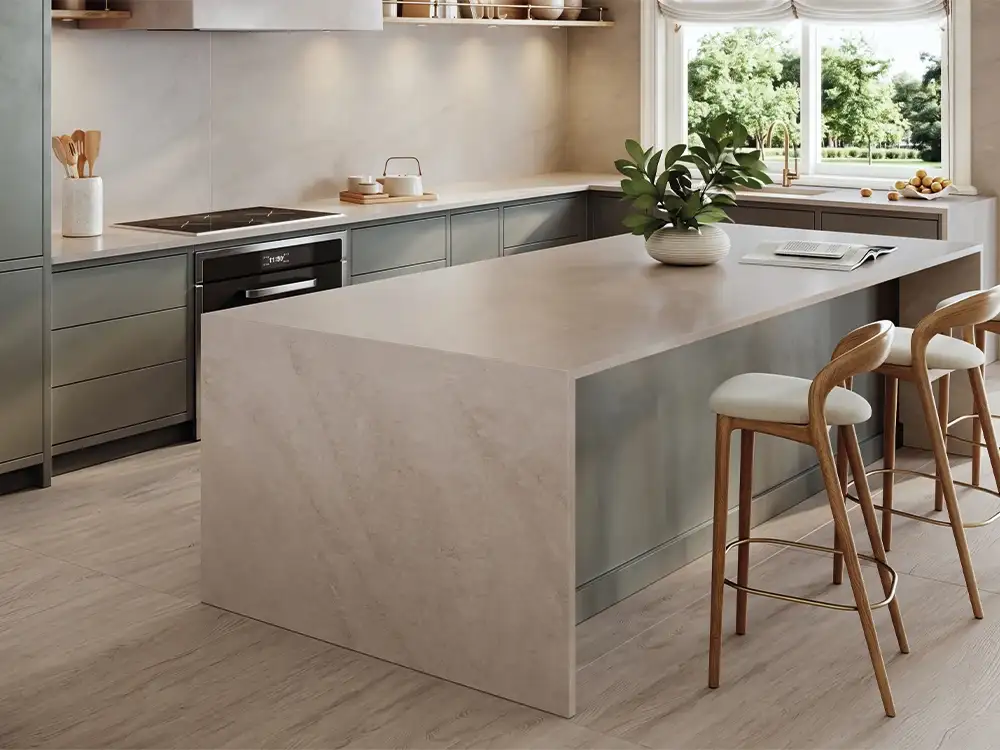
The Mineral Harmony collection has been designed for different applications in furnishings and interior architecture. Among the main uses indicated by Cosentino are kitchen worktops, islands, wall cladding and integrated furnishings.
The color continuity of the two finishes allows projects in which the mineral surfaces become linking elements between different components of the space.
On Silestone® kitchen countertops, the Soft Sand and Clay Veil tones introduce a natural palette, with restrained graphic variations and an aesthetic conceived to harmonize with furniture and cladding. Using the same finishes on islands and walls can also help define coordinated compositions, enhancing the relationship between materials and volumes.
The new colors therefore expand the choices available to designers and interior architects interested in decorative mineral surfaces for contemporary spaces.
Hybriq+® technology: recycled materials and surface performance
The Mineral Harmony collection is produced using Hybriq+® by Silestone® technology, which integrates a high percentage of recycled materials and quality minerals. According to Cosentino, the new surfaces offer resistance to impacts, stains, moisture, scratches and high temperatures.
The collection is also accompanied by a warranty of up to 25 years, under the conditions provided by the manufacturer. These characteristics help define the material's technical profile, intended for applications where aesthetics and functionality must coexist.
The inclusion of recycled components is an additional element of Cosentino's research into surface composition, combining the product's technological evolution with resource valorization.
Mineral surfaces and interior design trends: minimalism, Japandi and natural colors
The Silestone® Mineral Harmony palette fits into the search for surfaces characterized by natural colors, discreet textures and finishes capable of interacting with different furnishing styles. Soft Sand and Clay Veil interpret two complementary shades: the brightness of light sand and the warmth of clay beige.
These features make them consistent with spaces inspired by contemporary minimalism, the Japandi style and Mediterranean interior design. In such contexts, surfaces play an important role in defining the atmosphere of spaces, helping create continuity between furnishings, cladding and materials.
With Mineral Harmony, Cosentino expands the Silestone® offering with a collection that links zero crystalline silica mineral surfaces, material technology and aesthetic research, proposing new design possibilities for kitchens and interior spaces.