 en
en  Italian

- 21/09/2026
- Laminate surfaces
Index
-
Article description
- Venezia by Abet Laminati: Venetian terrazzo becomes a decorative surface
- Colors and decorative laminates: the three color interpretations of Venezia
- Venezia, Piccola Venezia and Grande Venezia: three scales for the design
- Decorative surfaces for walls, furniture and interior design
- Matte finish: tactility and surface perception
- Laminates as a material for contemporary interior design
- Abet Laminati and Giulio Cappellini: laminate as a design material
- Venezia by Abet Laminati: collection specifications
- FAQ on decorative laminates and Venezia by Abet Laminati
- Fill the contact form
Color, pattern and finish can transform a surface into a true element of the interior design project. From this vision Venezia is born, the new collection of Abet Laminati decorative laminates designed by Giulio Cappellini.
Inspired by traditional Venetian terrazzo, the collection reinterprets its language through a contemporary design, developed to interact with different scales of architecture, interior design and furniture.
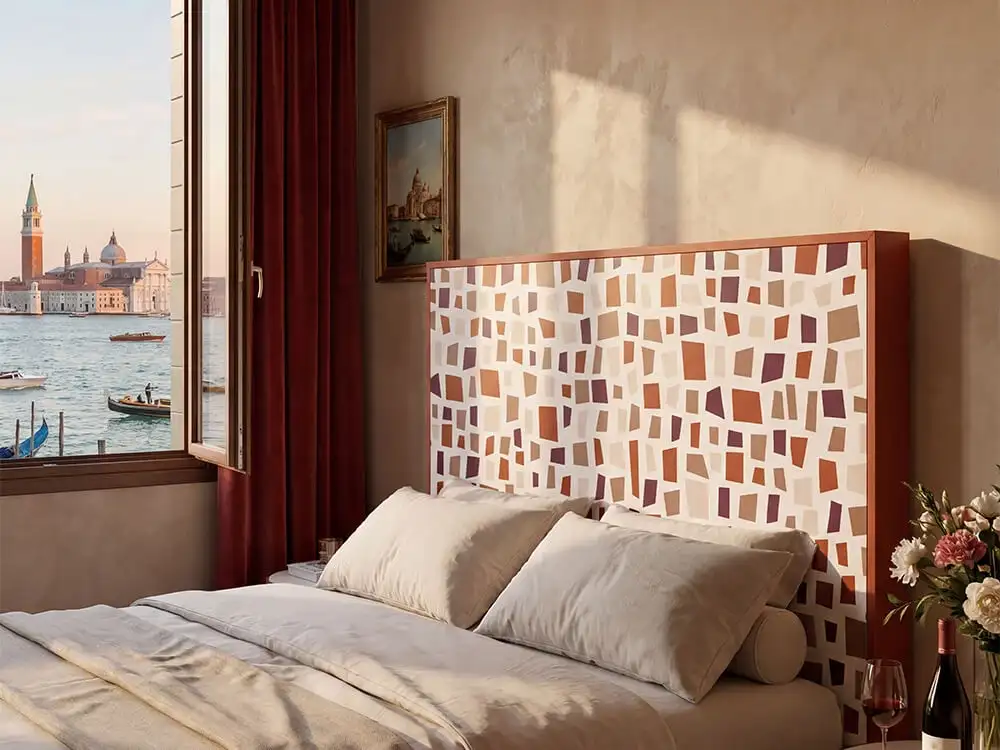
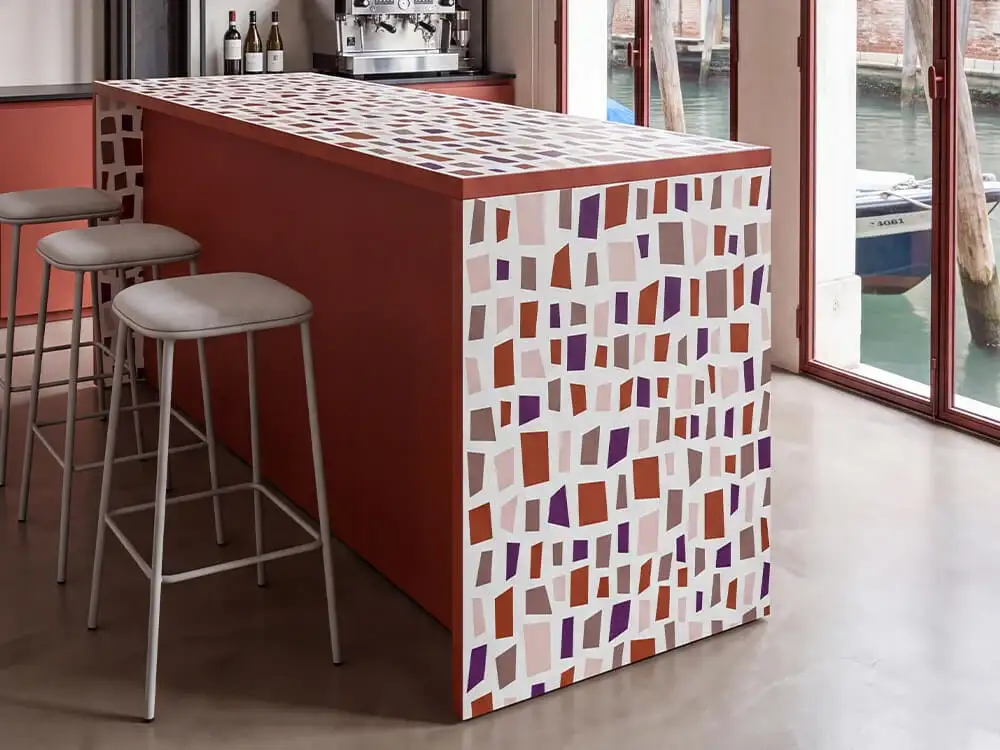
Venezia is a collection of Abet Laminati decorative surfaces characterized by a pattern inspired by Venetian terrazzo, offered in various color combinations and in three scales: Venezia, Piccola Venezia and Grande Venezia.
The project stems from the desire to explore laminate not only as a functional surface, but as a material capable of contributing to the visual, color and tactile identity of the space.
Venezia by Abet Laminati: Venetian terrazzo becomes a decorative surface
The starting point of the collection is the Venetian terrazzo, one of the most recognizable decorative surfaces of the Italian tradition.
Giulio Cappellini reinterprets its structure through a pattern composed of tesserae that appear distributed randomly, but which actually follow a precise graphic balance.
The reference to tradition is thus transformed into a contemporary decoration for interior design, without resorting to a simple reproduction of the original material.
The surface becomes a graphic field in which shape and color build different visual rhythms, allowing the decoration to relate to furniture, walls and other elements of the space.
Colors and decorative laminates: the three color interpretations of Venezia
Color is one of the central elements of Abet Laminati's research and plays a decisive role in the Venezia collection as well.
The palette alternates vibrant tones with softer, enveloping colors, aiming to offer different possibilities of integration within a project. The collection develops through three color interpretations.
The first solution combines primary colors with neutral bases. A second uses more complex compositions of mixed colors, always on neutral backgrounds. The third instead introduces the relationship between the pattern and colored bases.
The different combinations allow changing the character of the surface while keeping the collection's design recognizable. Additionally, the possibility of pairing decorative laminates and solid colors makes it possible to build coordination, contrast and color continuity within the same project.
Venezia, Piccola Venezia and Grande Venezia: three scales for the design
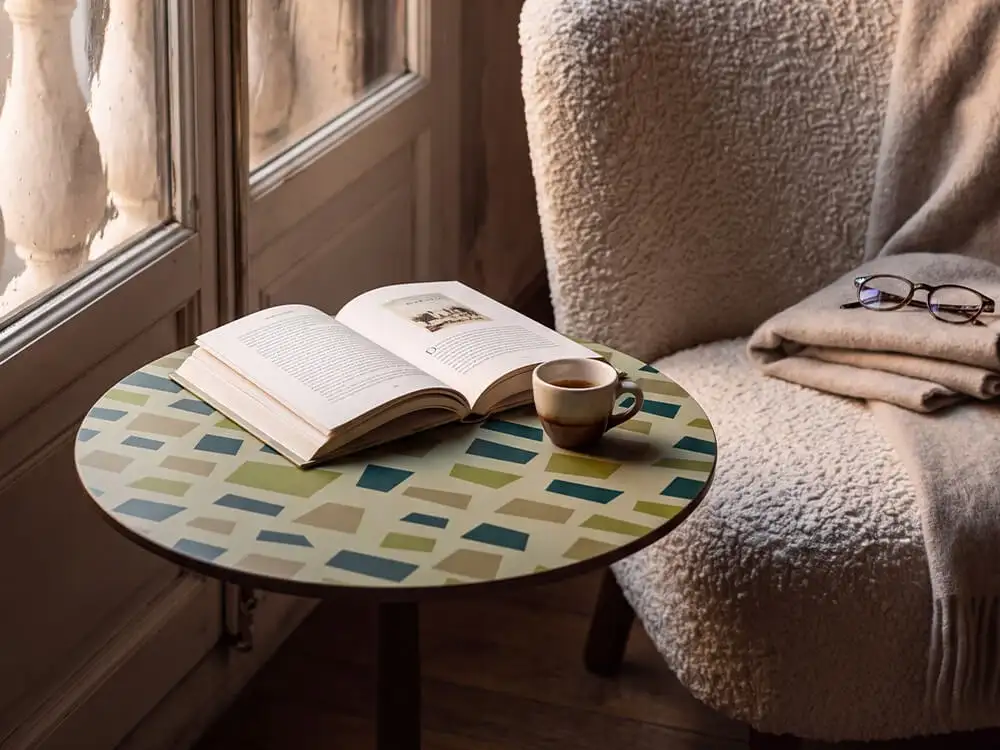
One of the distinctive features of the collection is the possibility of choosing the same graphic language in three different sizes. The decoration is in fact available in the variants:
Venezia, Piccola Venezia and Grande Venezia.
Scale variation allows placing the pattern in relation to the dimensions of the element to which it is applied.
The largest version can have a greater presence on architectural-sized surfaces, while the other interpretations allow transferring the same language to furniture elements and smaller applications.
The relationship between pattern size and surface size therefore becomes a true design component. Not only does the drawing change in size: the way the surface is perceived in the space also changes.
Decorative surfaces for walls, furniture and interior design
Venezia's versatility is also linked to the possibility of using the decoration both vertically and horizontally. This characteristic widens compositional possibilities and allows working with the same graphic identity on different elements of the project.
The collection was in fact developed to interact with different scales, from architecture to interior design to furniture, allowing the designer to use the pattern with different proportions depending on the application.
The ability to combine decorated surfaces with solid colors further expands the compositional system, enabling coordination of different elements without necessarily using the same pattern throughout the environment.
Venezia is also conceived for an international market: the graphic language and the different color possibilities were developed to adapt to different projectual and cultural contexts while keeping the collection's identity recognizable.
Matte finish: tactility and surface perception
The research carried out by Abet Laminati and Giulio Cappellini does not concern only graphics and color.
Venezia uses a matte and natural finish, chosen to enhance the sensory component of the surface.
Reduced reflections make the relationship between pattern, hues and material more evident, while tactile perception contributes to the overall experience of the laminate.
This is a particularly significant aspect in contemporary design of surfaces for interior design, where the material is evaluated not only for its visual aspect but also for how it is perceived through touch and in relation to light.
For Giulio Cappellini, in fact, design is not exclusively about the visual dimension, but constitutes an experience that also involves touch.
Venezia is born from this approach, proposing a surface designed to be simultaneously observed and perceived through the material.
Laminates as a material for contemporary interior design
The Venezia collection also provides an opportunity to reflect on the role of laminate in interior design.
From a surface predominantly associated with function, laminate has over time become a tool through which architects and interior designers can act on color, texture, pattern and spatial perception.
The possibilities offered by decorative surfaces allow coordinating furnishings and architectural elements through a common language, or using the material as an element of contrast within the environment.
In the case of Venezia, this logic is developed through the combination of pattern, scale, color and finish, four variables that can change the relationship between surface and space.
Abet Laminati and Giulio Cappellini: laminate as a design material
With Venezia, Abet Laminati continues its collaborative path with important protagonists of contemporary design.
The project signed by Giulio Cappellini starts from the knowledge of the material and its expressive possibilities to develop a surface capable of working on different levels.
The reference to Venetian terrazzo provides the graphic matrix, while color, scale and finish transform the original motif into a tool for contemporary design.
Venezia thus fits into Abet Laminati's research on decorative laminate as a material for architecture, interior design and furniture, enhancing not only its aesthetic possibilities but also its capacity to adapt to different design languages.
Venezia by Abet Laminati: collection specifications
| Characteristic | Venezia |
|---|---|
| Manufacturer | Abet Laminati |
| Collection | Venezia |
| Design | Giulio Cappellini |
| Type | Laminates and decorative surfaces |
| Inspiration | Venetian terrazzo |
| Decoration scales | Venezia, Piccola Venezia, Grande Venezia |
| Colors | Vibrant and soft tones, neutral and colored bases |
| Finish | Matte and natural |
| Orientation | Vertical and horizontal |
| Combinations | Decorated surfaces and solid colors |
| Application areas | Architecture, interior design, furniture |
FAQ on decorative laminates and Venezia by Abet Laminati
What are decorative laminates?
Decorative laminates are surfaces used in furnishings and interior design to characterize elements and spaces through color, pattern, texture and different finishes. The features and fields of application depend on the specific type of laminate.
Where can decorative laminates be used?
Fields of application depend on the technical characteristics of the specific product. In the case of Venezia, Abet Laminati developed the decoration to be used both vertically and horizontally and at different design scales, from architecture to furniture.
What is Venezia by Abet Laminati?
Venezia is a collection of Abet Laminati decorative surfaces designed by Giulio Cappellini, characterized by a pattern inspired by traditional Venetian terrazzo and offered in different color combinations and scales.
What inspired the Venezia collection?
Venezia is inspired by Venetian terrazzo. The arrangement of the traditional tesserae is reinterpreted through a contemporary graphic language based on the relationship between pattern and color.
What is the difference between Venezia, Piccola Venezia and Grande Venezia?
They are three different scales of the same decorative language, developed to relate the pattern to the dimensions of the application, from furniture elements to larger surfaces.
Which colors characterize Venezia by Abet Laminati?
The collection offers different combinations: primary colors on neutral bases, mixed colors on neutral backgrounds and hues paired with colored bases, alternating vibrant tones and softer solutions.
Who designed Venezia for Abet Laminati?
The Venezia collection was designed by Giulio Cappellini for Abet Laminati.
What finish characterizes Venezia?
The collection uses a matte and natural finish, chosen to enhance the visual and tactile perception of the surface.